
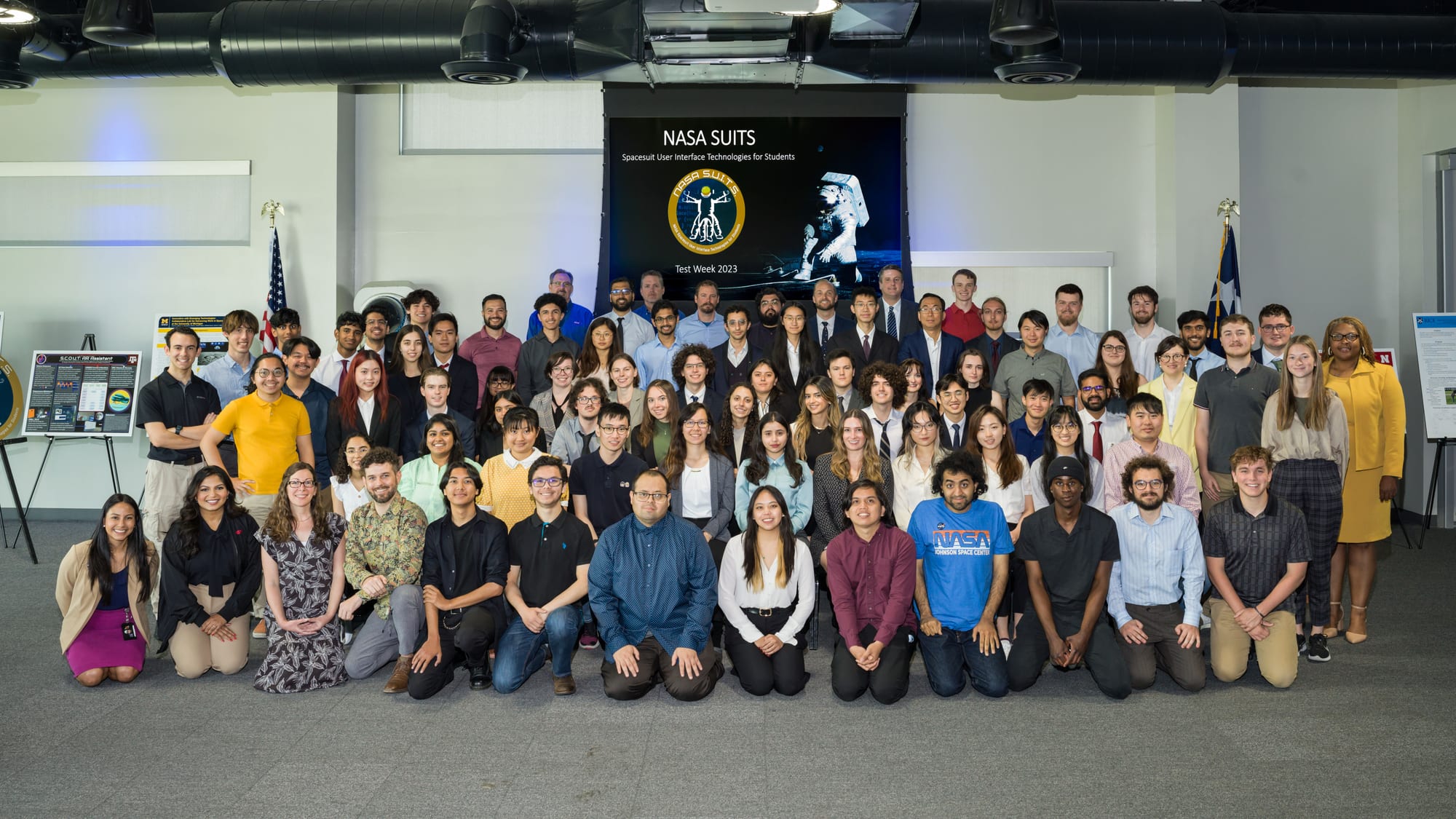
NASA SUITS Application Form 2026–2027
Want to create an augmented reality interface for astronauts exploring the Moon during a simulated lunar EVA? Fill out the form below! If our proposal is selected, the seven members of our team will have the opportunity to fly out to NASA’s Johnson Space Center in Houston in May 2027 to test and showcase our system to NASA engineers in a simulated lunar EVA.
Please note that this is a year long commitment. The team works together from the fall semester through winter break and the spring semester, ending with onsite testing in Houston in May 2027.
We’re looking to put together a diverse team with a wide range of experiences and skill sets, so feel free to apply even if you don’t have a ton of prior experience with XR development!
The application process will have two rounds. The first round will be based on your written application. Candidates selected to move forward will be invited to a second round interview. If you are not invited to an interview, it means we have decided to move forward with other applicants. The interview gives us a chance to get to know you better and gives you the opportunity to ask us questions about the challenge and the team.
Applications close on September 24. We review applications on a rolling basis, so if you submit early, choose interview times earlier in the window and we can meet with you sooner.
This year’s NASA SUITS Challenge focuses on developing spacesuit user interfaces, navigation systems, voice assistants, and AI and ML tools to help astronauts safely and efficiently complete tasks while exploring the lunar surface.
Potential Areas of Contribution
The areas below are not fixed positions, and you are not applying for one specific role. These are some of the areas we need to keep in mind when putting together our team. Members may contribute across multiple areas depending on their skills, interests, and what the project needs.
- XR Interface Development
- Build the heads up display the astronaut wears, including live suit telemetry, task procedures, scientific information, alerts, and passthrough AR.
- Navigation Systems
- Design the mapping and wayfinding system, including a 2D minimap, route planning across sites, navigation aids, and a breadcrumb trail back to the lander.
- AI and ML
- Integrate AI as a decision support layer, including predictive oxygen and consumables modeling, route optimization, autonomous features, and safety guardrails on model output.
- Systems Integration
- Connect the interface to NASA’s live telemetry server, integrate the natural language voice assistant, connect different components of the system, and ensure reliability during testing.
- UX and Human Factors
- Run human in the loop studies with real users, define usability metrics, evaluate the interface, and validate display legibility under simulated lunar low light conditions.
- Outreach and Communications
- Build the community and industry engagement program, manage sponsor and partner relationships, and produce the team’s documentation, presentations, and demo media.
Before you submit
By submitting this application, I confirm that the information I have provided is accurate and complete to the best of my knowledge, and that I have answered every question honestly and in my own words. I understand that the XR Club may verify any part of this application, and that providing false or misleading information may result in my application being removed from consideration.
Application submitted
Thanks, . We’ll reach out at about interview times.
Back to home